
Palm Oil: The Hidden Ingredient Shaping Our Health and Planet

Take a moment and look around your home. The cooking oil in your kitchen, the biscuits in your pantry, the soap by your sink, the lipstick in your handbag, even the toothpaste you used this morning — there is a strong chance that all of them contain one common ingredient: palm oil.
It may not be printed boldly on the front of the label. It may appear under different technical names. But palm oil is everywhere. In fact, nearly one-third of the world’s edible oil consumption today comes from palm oil. It is the most widely consumed vegetable oil on the planet.
Yet behind its convenience and low cost lies a complex story — one that touches public health, global trade, deforestation, wildlife extinction, and human rights.
From Red Gold to Refined Commodity
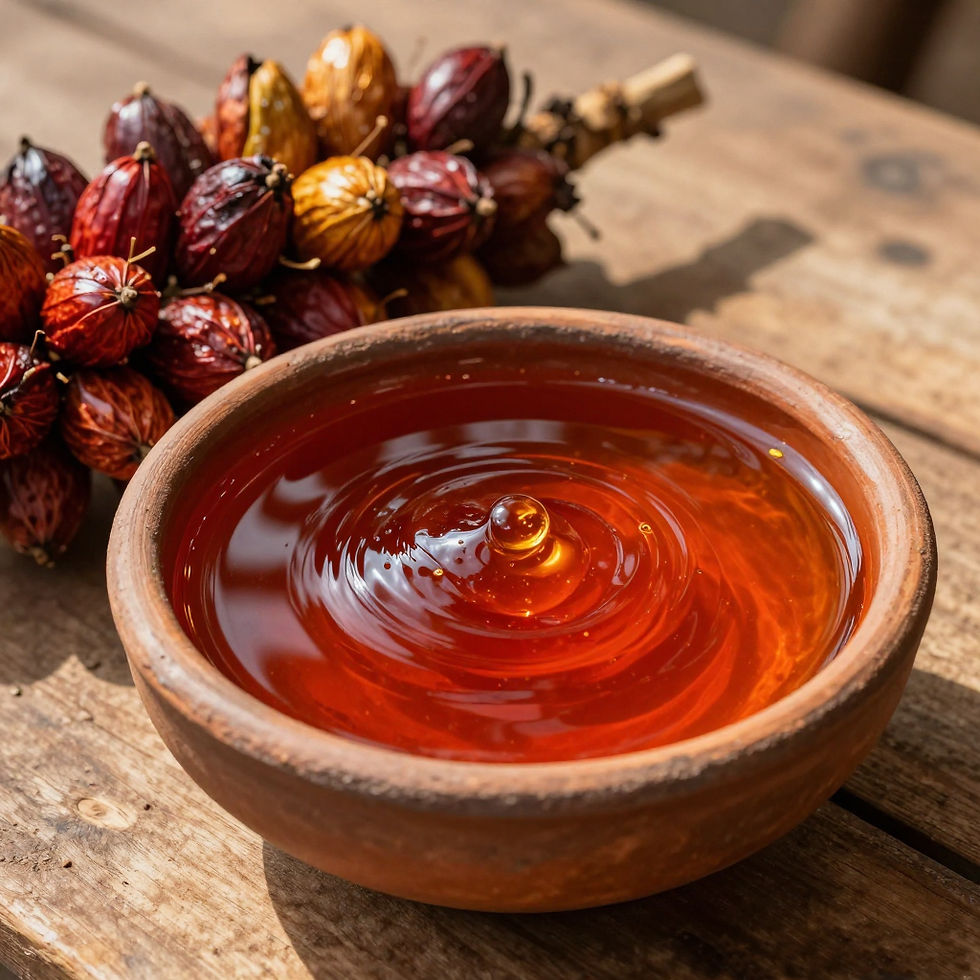
Palm oil in its original form is known as red palm oil. Extracted from the fruit of the oil palm tree, it has been used for thousands of years in West Africa. Rich in vitamins A and E and loaded with antioxidants, traditional red palm oil has nutritional benefits. Its deep orange-red color comes from carotenoids — the same natural pigments that give carrots and tomatoes their vibrant hue.
However, what most of the world consumes today is far removed from this traditional version. Modern palm oil is often refined, bleached, deodorized, and sometimes hydrogenated. In the process, it becomes neutral in color, taste, and smell — ideal for mass-produced food products.
Palm oil’s key commercial advantage lies in its composition. It contains about 50 percent saturated fat, making it semi-solid at room temperature. This property gives processed foods longer shelf life and a desirable texture. It keeps biscuits crisp, chocolates smooth, and fried snacks crunchy. For manufacturers, it is a dream ingredient: stable, versatile, and cheap.

Why the World Depends on Palm Oil
The oil palm tree is extraordinarily productive. Compared to soybean, sunflower, or mustard crops, oil palms produce far more oil per hectare of land. This high yield translates into lower costs and abundant supply.
Today, about 3 billion people in over 150 countries use products containing palm oil. On average, a single person consumes roughly 8 kilograms of palm oil annually — often unknowingly. There are more than 200 common consumer products that contain palm oil in some form.
Since 1990, global palm oil consumption has increased fivefold. It is used not only in food but also in cosmetics, detergents, candles, and even biodiesel fuel.
For industries seeking efficiency and affordability, palm oil is almost irreplaceable.
India: The Largest Importer
India stands at the center of this global story. It is the world’s largest importer of palm oil. In 2021 alone, India consumed over 9 million metric tons of it. Between 2010 and 2018, palm oil consumption in the country surged by 230 percent.
Nearly 70 percent of vegetable oil used in India is imported, and close to 60 percent of that is palm oil.
From roadside vendors frying samosas and pakoras to factories producing chips and baked goods, palm oil has become a common choice — largely because it is cheaper than alternatives like mustard or soybean oil.
Its affordability makes it attractive, especially in a price-sensitive market. But that affordability raises important questions.
The Health Concerns

The health debate around palm oil centers primarily on its saturated fat content. Palm oil contains high levels of saturated fatty acids and palmitic acid. These compounds are known to increase LDL cholesterol — often referred to as “bad cholesterol.”
Elevated cholesterol levels increase the risk of heart disease and stroke.
A study conducted by researchers at Stanford University examined the potential impact of imposing a 20 percent tax on palm oil. Their findings were striking: such a measure could potentially save more than 350,000 lives by reducing heart attacks and strokes.
Historical examples add weight to these concerns. In the 1980s, Mauritius subsidized palm oil, making it cheaper for consumers. Palm oil consumption rose sharply, followed by a dramatic increase in heart disease cases. When the government shifted subsidies to soybean oil instead, cholesterol levels among the population dropped by 15 percent.
There are also concerns about carcinogenic compounds. The European Food Safety Authority has found that when palm oil is heated at very high temperatures, it can form contaminants known as glycidyl fatty acid esters. Once digested, these break down into glycidol — a substance shown in animal studies to promote tumor growth.
That said, scientists caution that more extensive human research is needed. The debate is ongoing. What is clear, however, is that excessive consumption of any oil — particularly in deep-fried and ultra-processed foods — poses health risks.
Moderation remains the key.
The Environmental Cost

Health concerns are only one dimension of the palm oil story. The environmental impact may be even more alarming.
To meet global demand, vast tropical rainforests have been cleared for palm oil plantations. In 2015 alone, more than 62,000 square miles — an area four times the size of Switzerland — were committed to palm oil cultivation.
Indonesia and Malaysia together produce more than half of the world’s palm oil. In Indonesia, forests are often burned to clear land for plantations. In 2015, these fires released more than 2 billion tons of carbon dioxide into the atmosphere, contributing significantly to global warming.
The destruction of rainforests has severe consequences for biodiversity. The Leuser Ecosystem in Sumatra — one of the last places where orangutans, rhinos, tigers, elephants, and bears coexist — is rapidly shrinking.
Orangutan populations in Borneo have declined by nearly 50 percent over the past 65 years. The Sumatran tiger and Sumatran rhino now number only in the hundreds.
When forests disappear, not only do animals lose their homes, but the planet loses one of its most powerful natural systems for absorbing carbon dioxide.
The Human Toll
Beyond forests and wildlife, palm oil expansion has also raised human rights concerns.
In some regions of Southeast Asia, migrant workers have reportedly been recruited under false promises and forced into harsh plantation labor. Passports have been confiscated, and workers have faced debt bondage and unsafe working conditions.
In parts of Africa and Central America, local communities have been displaced from ancestral lands to make way for plantations. Villagers have reported inadequate compensation, polluted water sources, and loss of traditional livelihoods.
While not all producers engage in such practices, the complexity of global supply chains makes it difficult to trace the origin of palm oil once it enters international markets.
Is Boycotting the Answer?
Given these concerns, some consumers ask: should we stop using palm oil entirely?
The answer is not straightforward.
Palm oil’s high yield means that replacing it with other vegetable oils could require even more land, potentially shifting environmental damage elsewhere. Soybean and sunflower crops, for example, require significantly larger areas to produce the same amount of oil.
This means that palm oil itself is not inherently evil; rather, the scale and manner of its production create problems.
Efforts are underway to promote sustainable palm oil through certification programs. However, critics argue that monitoring and enforcement remain inconsistent.
Ultimately, experts suggest that reducing overall consumption of processed and deep-fried foods may be more effective than focusing solely on one ingredient.
What Can Consumers Do?
While global trade systems may seem beyond individual control, everyday choices still matter.
Read ingredient labels on packaged foods.
Limit consumption of deep-fried and ultra-processed snacks.
Cook more meals at home using a balanced mix of oils.
Avoid excessive oil use in general.
Support brands that commit to sustainable sourcing.
The broader lesson extends beyond palm oil. Modern diets are increasingly dependent on convenience foods. Reducing reliance on highly processed products naturally reduces exposure to excessive fats — whether palm oil or otherwise.
A Broader Reflection
Palm oil began as a traditional cooking staple in West Africa. It played a role in industrial development during the 19th century. It helped replace harmful trans fats in processed foods. It has provided income to millions of farmers.
At the same time, it has contributed to rising rates of heart disease, large-scale deforestation, wildlife extinction, and labor exploitation.
Palm oil is not just an ingredient. It is a symbol of modern consumption — efficient, globalized, and often disconnected from its consequences.
The real question is not whether palm oil is entirely good or entirely bad. The more pressing question is whether our patterns of consumption are sustainable.
Because in the end, no single ingredient should dominate our plates or our planet at such scale.
Awareness is the first step. Moderation is the next.
And perhaps the simplest truth remains this: the healthiest food is often the one prepared thoughtfully at home — in balance, in moderation, and with care.


Comments